Initial setup
In order to use your Lumina Operation Center, you have to register it with Avelon Cloud or your local Alcedo Inhouse server.
Note
Before proceeding, make sure you have the registration code of your device ready. You will receive it upon ordering a Lumina Operation Center from our webshop. If you don’t have a registration code, please contact Avelon support.
Since you will be switching between the Lumina Operation Center, the Beetle services that are running on it, and the base system (i.e. Avelon Cloud or Alcedo Inhouse) during this guide, the individual steps are marked accordingly:
Lumina Operation Center |
Beetle services on the Lumina Operation Center |
Base system (Avelon Cloud or Alcedo Inhouse) |
Boot up the device
Attach the Lumina Operation Center with your technical network via the LAN1 port.
Make sure that the Lumina Operation Center is in the same network as the Avelon server with which you want to pair it. If you want to pair it with Avelon Cloud, it needs access to the Internet. If you want to pair it with an Alcedo Inhouse system, it needs access to that particular server.
Connect the device using the power supply provided (24 VDC). The device will turn on automatically.
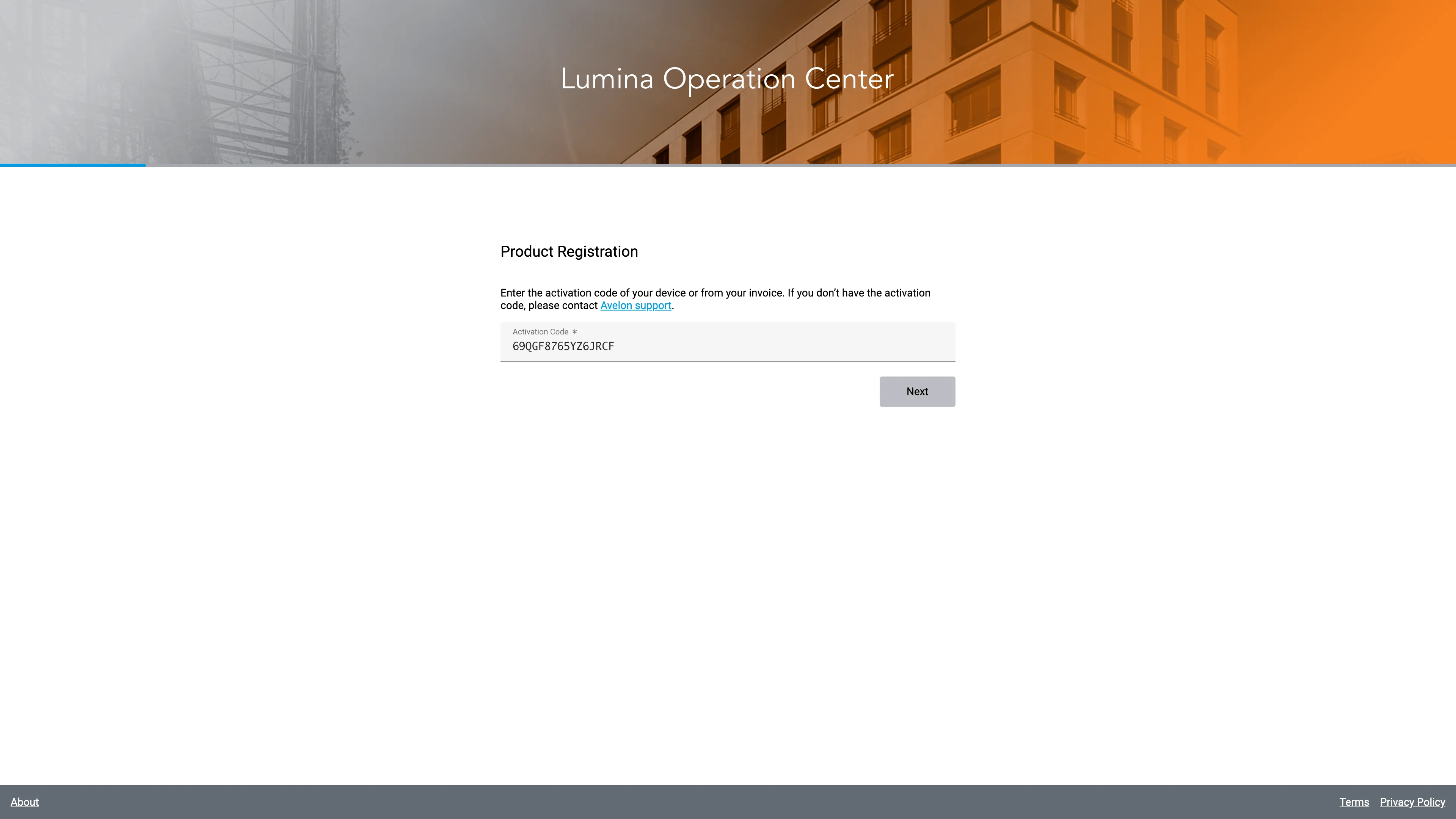
Wait until the device registration wizard appears on screen.
Note
It can take several minutes for the Linux operating system to boot up and for the local Docker server and the Avelon middleware to start. If the wizard doesn’t appear after 10 minutes, you can manually open the Firefox browser by tapping on its icon, and then enter
http://localhostin the address bar. If the browser returns an error message or the page remains empty, refresh the page in regular intervals until the activation wizard appears. For more troubleshooting information, see Troubleshooting.If the Lumina Operation Center and the base system (Avelon Cloud or Alcedo Inhouse) cannot communicate with one another at the time of this setup, we recommend connecting a computer to the LAN1 port of the Lumina Operation Center. You can then open the registration wizard in the web browser on your computer, which will make the setup process easier, especially in the later steps where you have to switch between the user interfaces of both systems. By default, the device is accessible via IP
192.168.1.234or via Bonjour service under the addresshttp://lumina-xxxxxxxx.local, wherexxxxxxxxis the serial number of the device.In the registration wizard, enter the registration code of your Lumina Operation Center. You should get this code as part of the product package, either on a piece of paper or in an email. After confirming the registration code with Register, the device is registered.
Configure network settings
In the next step, you’ll have to configure the LAN settings of the device.
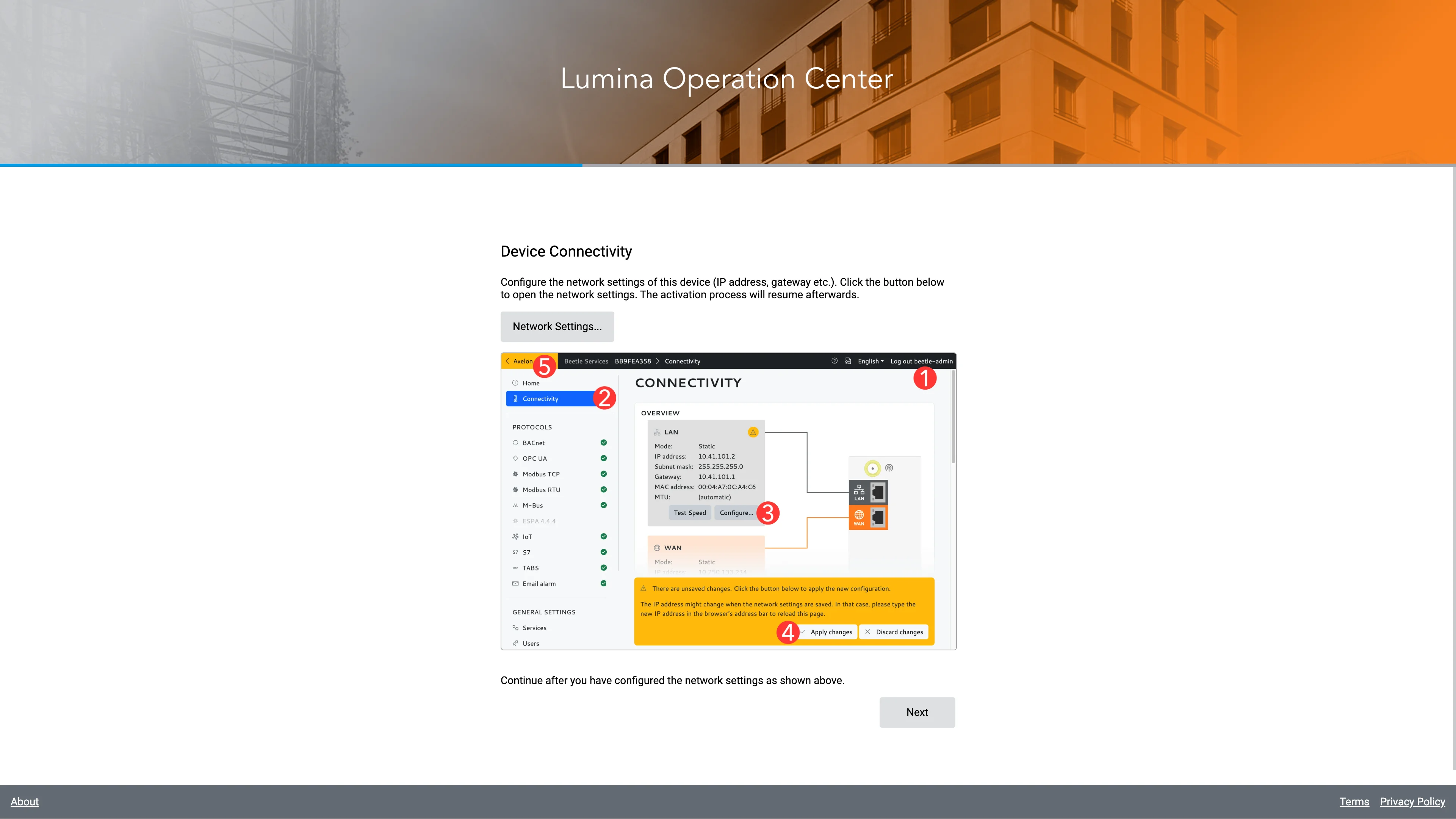
Click on Network Settings… to open the configuration interface (“Beetle Services”) of the Lumina Operation Center.
On the configuration interface, click on Log in at the top right and use the following login credentials to log in:
Username: beetle-admin
Password:
sm@rtCopper48
Note
To prevent unauthorized entities from changing the network settings on the Lumina Operation Center, it is recommended to change the default password. You can do this on the Users page after logging in.
After logging in, click on Connectivity in the left sidebar.
On the Connectivity page, scroll down to the section Network interfaces and click on Configure… on the respective network ports to configure them.
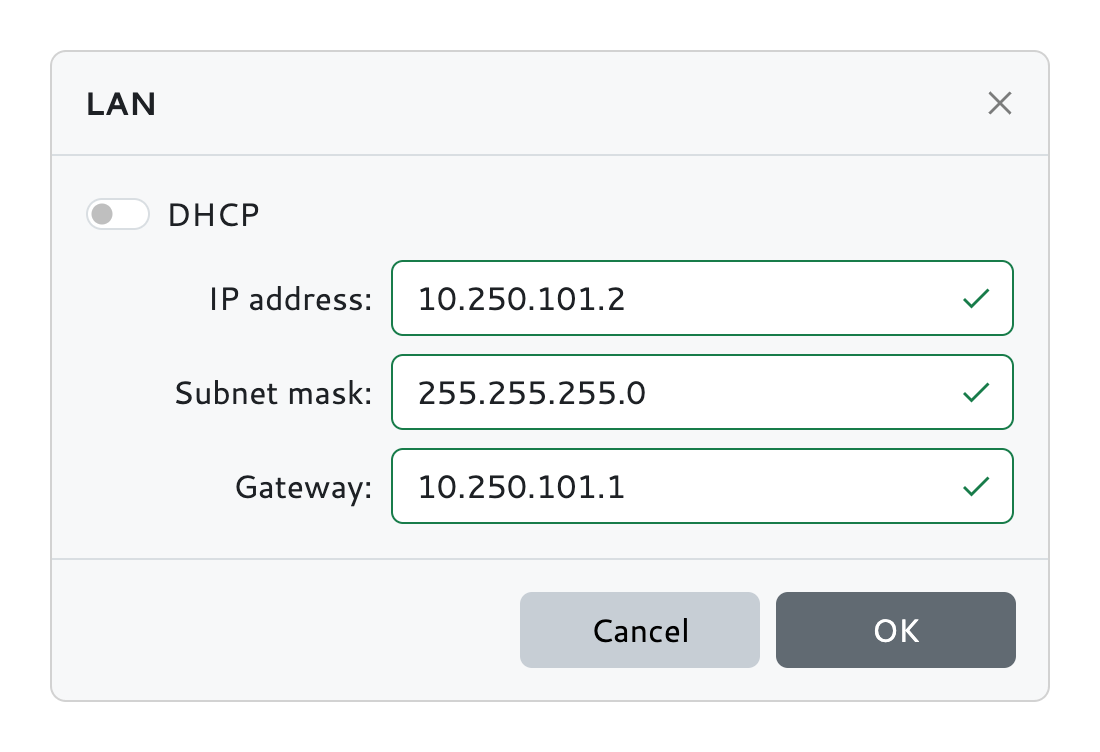
Disable DHCP and set the IP address, subnet mask and gateway address for the Lumina Operation Center. Confirm the settings with OK.
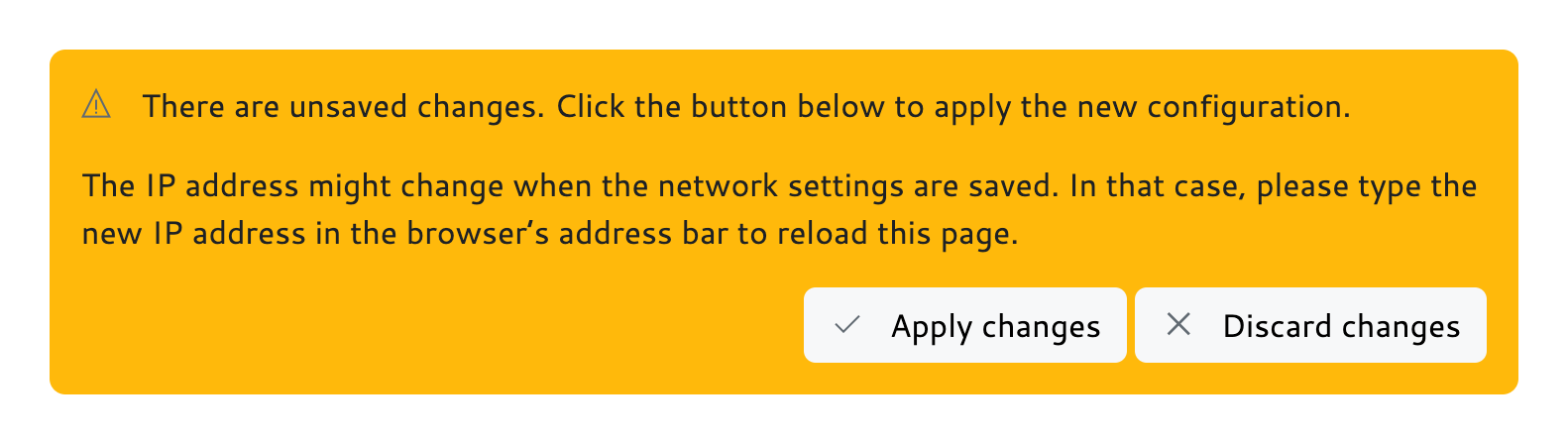
After you’ve configured all the necessary network ports, apply the new settings by clicking on Apply changes.
Now return to the registration wizard by clicking on the yellow button < Lumina Operation Center in the top left corner of the page. Then proceed to the next step by clicking on Next.
Connect device to base system
Select the type of your system with which you want to synchronize the Lumina Operation Center under Choose System Type.
Avelon Cloud
The device synchronizes with avelon.cloud over the Internet.
Alcedo Inhouse
The device synchronizes with an Alcedo Inhouse system in the local network.
We’ll refer to the selected system as the base system.
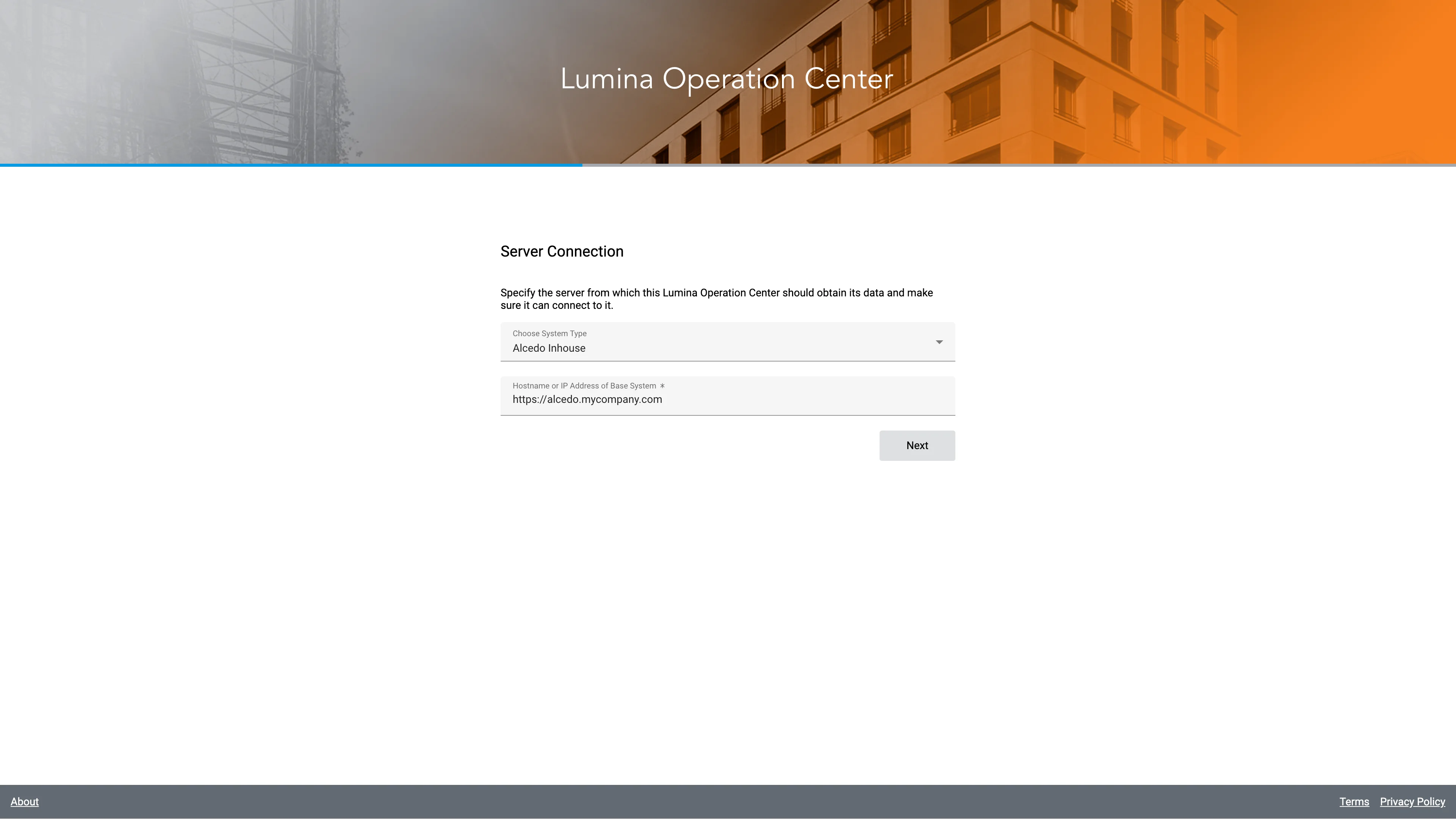
If you’ve selected Alcedo Inhouse as the system type, you’ll have to enter the URL of your Alcedo Inhouse server in the field System URL below, e.g. “https://alcedo.mycompany.com”. Please ask your network administrator for the correct URL of your Alcedo Inhouse system if you’re not sure.
Click on Next. On the Device Integration page, the Lumina Operation Center is trying to connect to the base system. If the connection can be established successfully, you will be forwarded to step 16. Otherwise, there are a few strings you’ll need to check so that the device can connect to the base system:
Check that the Lumina Operation Center and the base system are physically connected on the same network.
Configure your firewall to allow connections between the Lumina Operation Center and the base system.
You can also try to disable the validation of the TLS certificate during this step by enabling the checkbox Ignore Invalid Certificate, in case the base system has no valid TLS certificate or none at all.
You can also click on Network Settings to go back to the network configuration page from step 7.
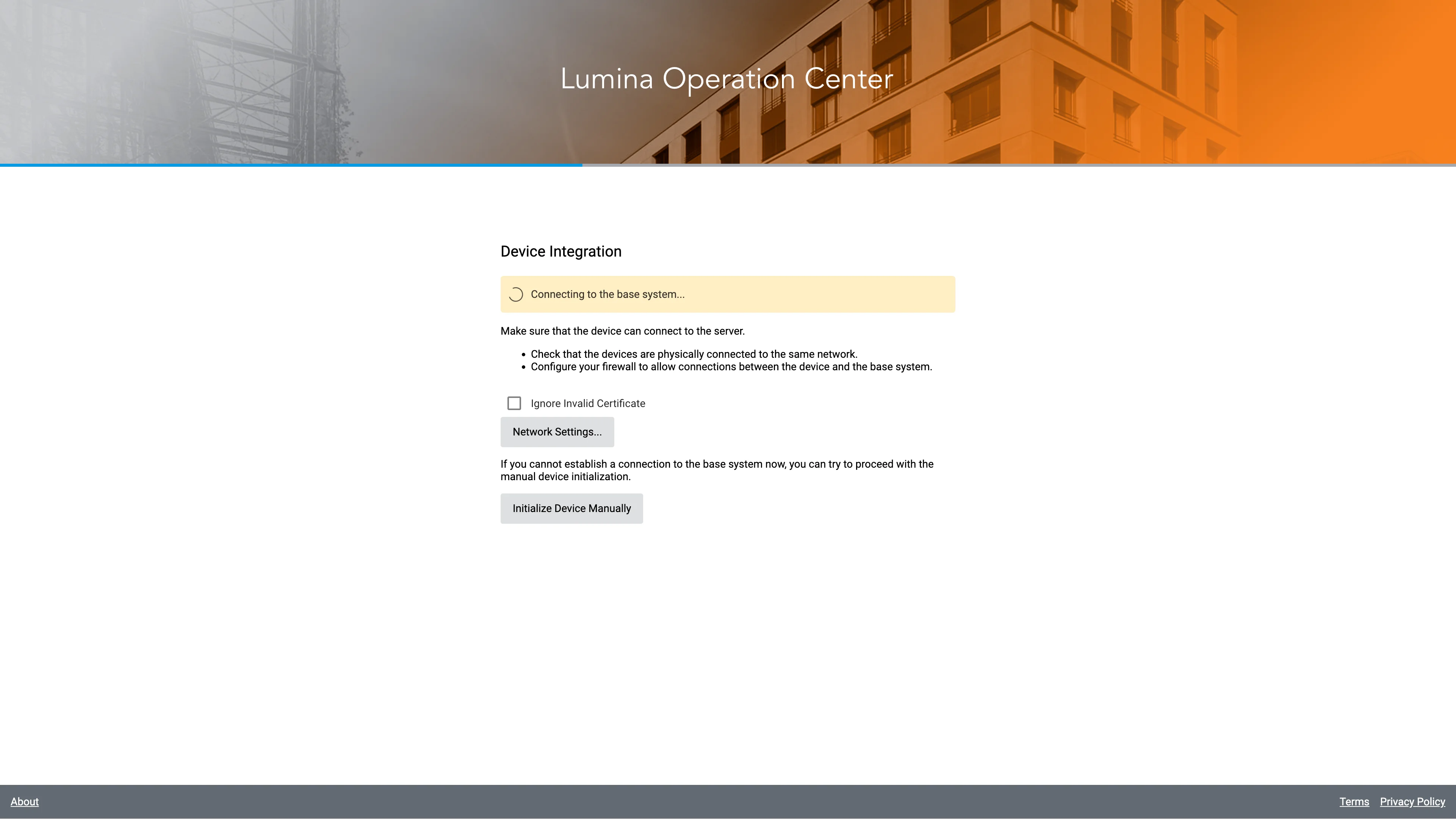
If you cannot establish a connection between the Lumina Operation Center and the base system, you can integrate the device manually. Click on Integrate Device Manually and follow the manual device integration guide.
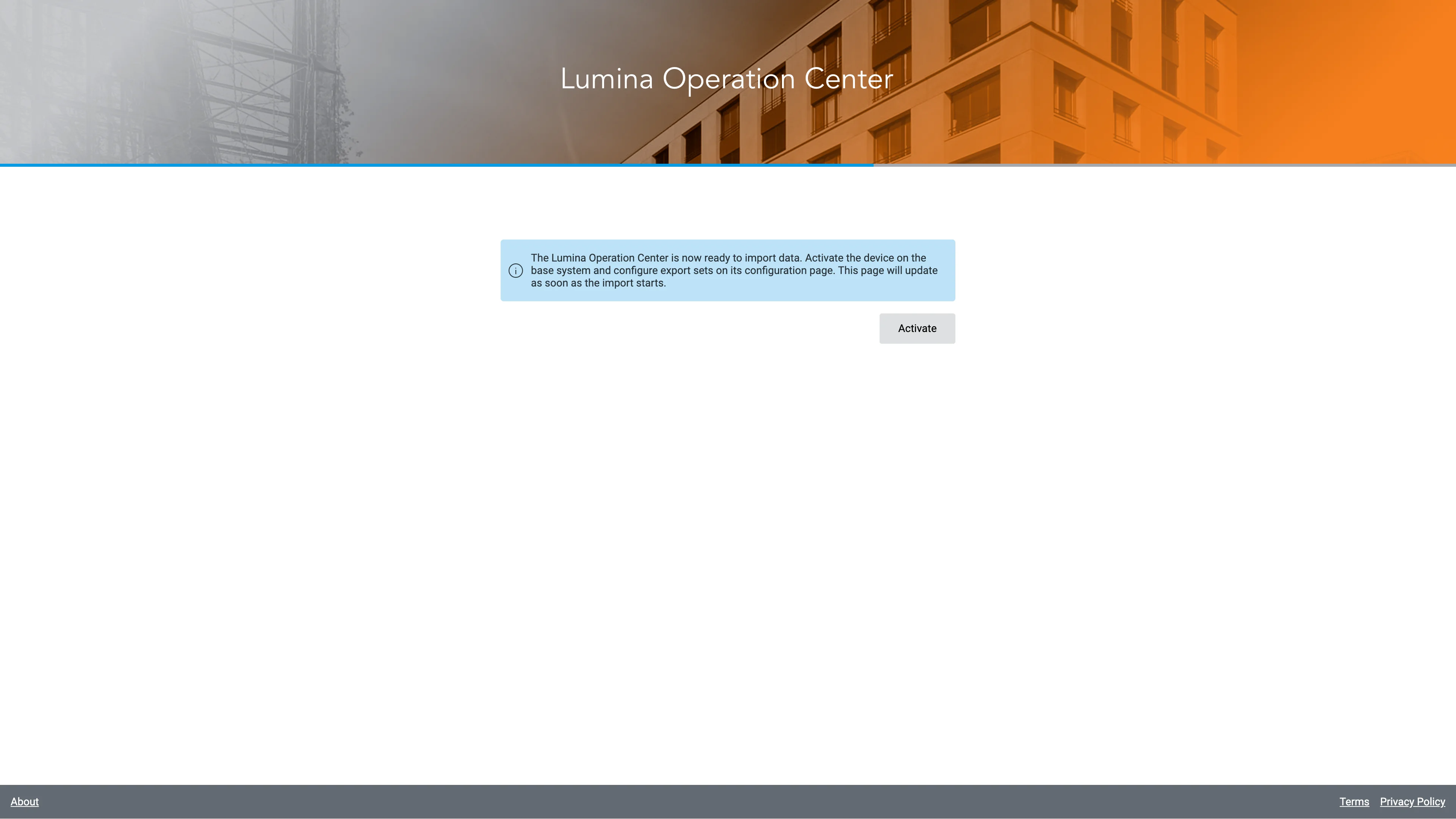
Once the Lumina Operation Center is able to connect to the base system, activate it by clicking on Activate.
Activate device on base system
This will take you to the login page of the base system (Avelon Cloud or Alcedo Inhouse, depending on your choice in step 13).
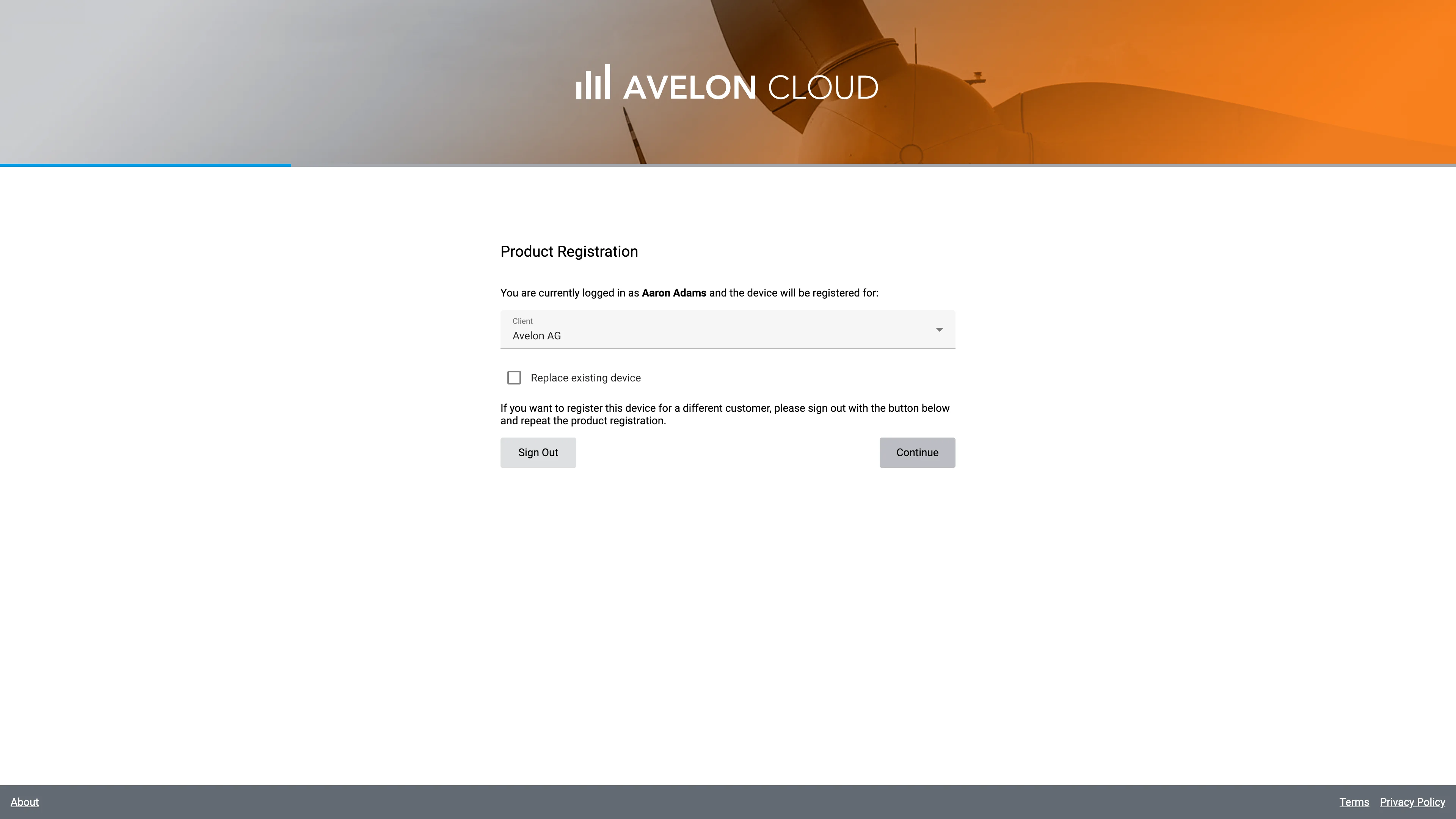
If you’re not already logged in, you can either create a new client account on the base system, or you can log in with your existing user to assign the Lumina Operation Center to your existing client account.
If you’re already logged in, you can select the appropriate client account directly.
Click on Next.
You can now enter a name for your Lumina Operation Center.
The device will be displayed with this name in the administration interface of the base system.
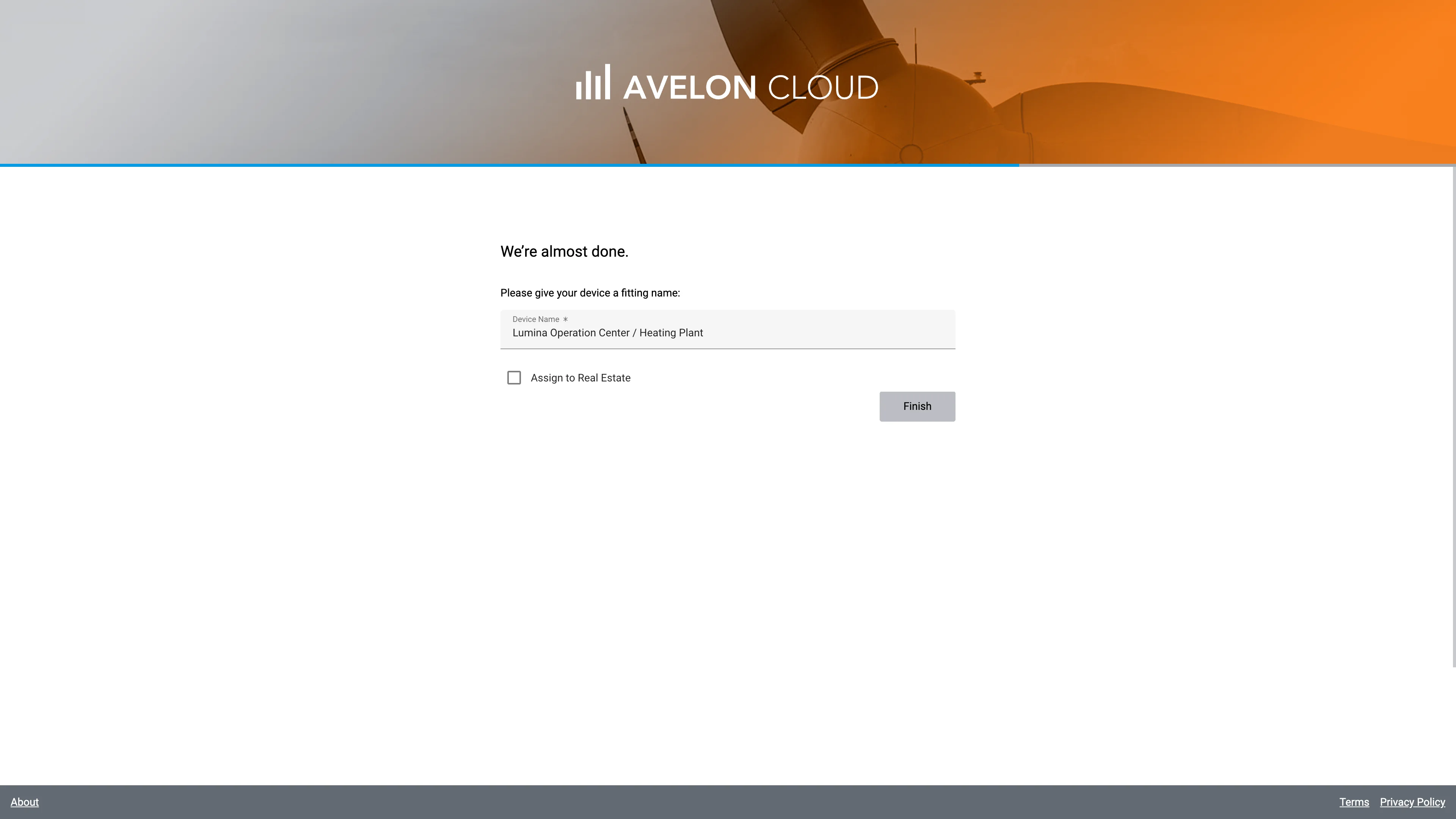
By enabling the option Assign to Real Estate, you can specify where your device is located.
This step is optional, though.
If you already have a real estate defined in the base system, you can select it from the Real Estate list. Otherwise, you can create a new one.
If you click on Find real estates nearby, the system will try to determine your current location and fill the fields for you.
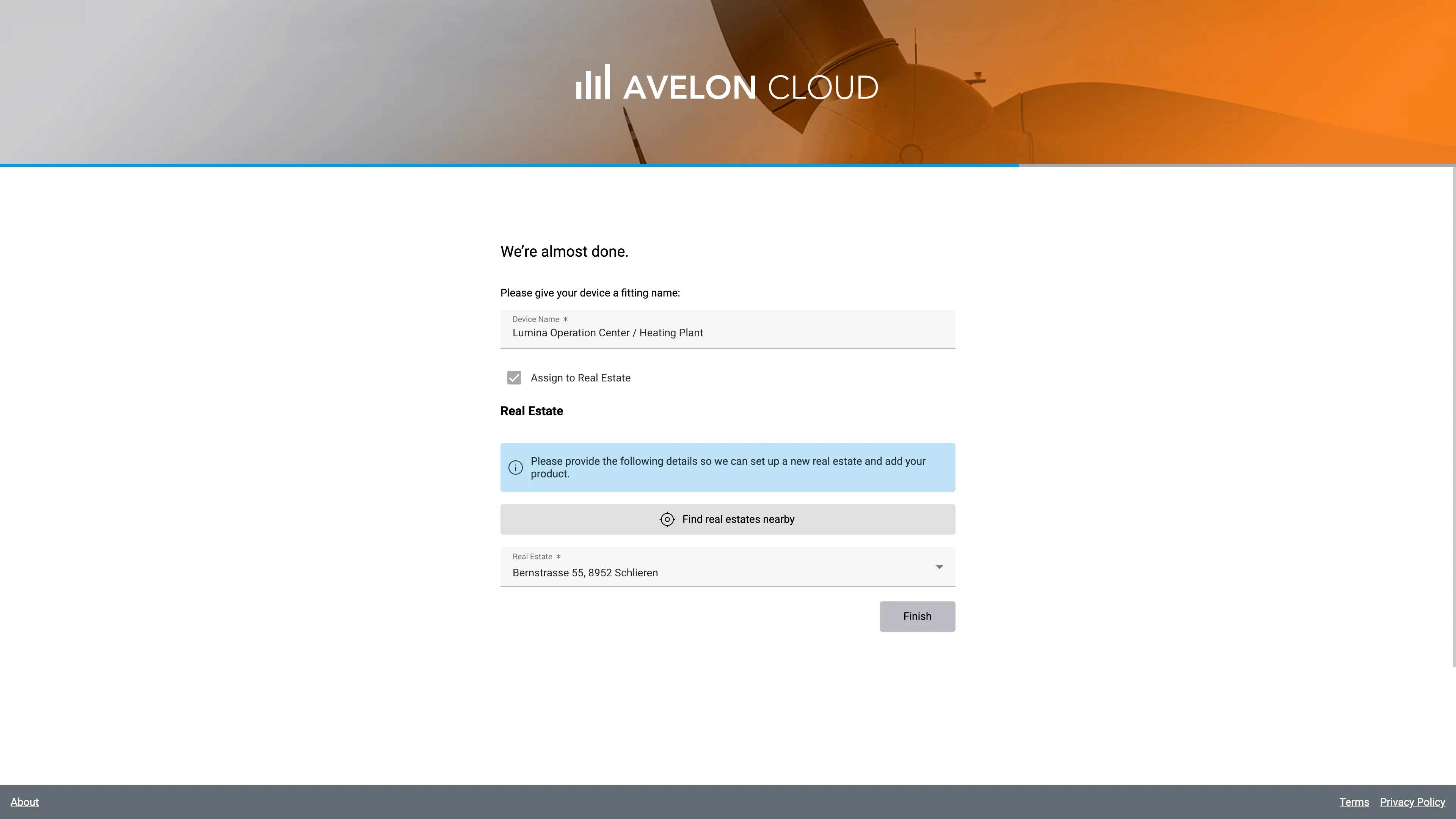
Click on Finish to complete the registration process.
Back on the Lumina Operation Center, you are prompted to initiate your first synchronization with the base system.
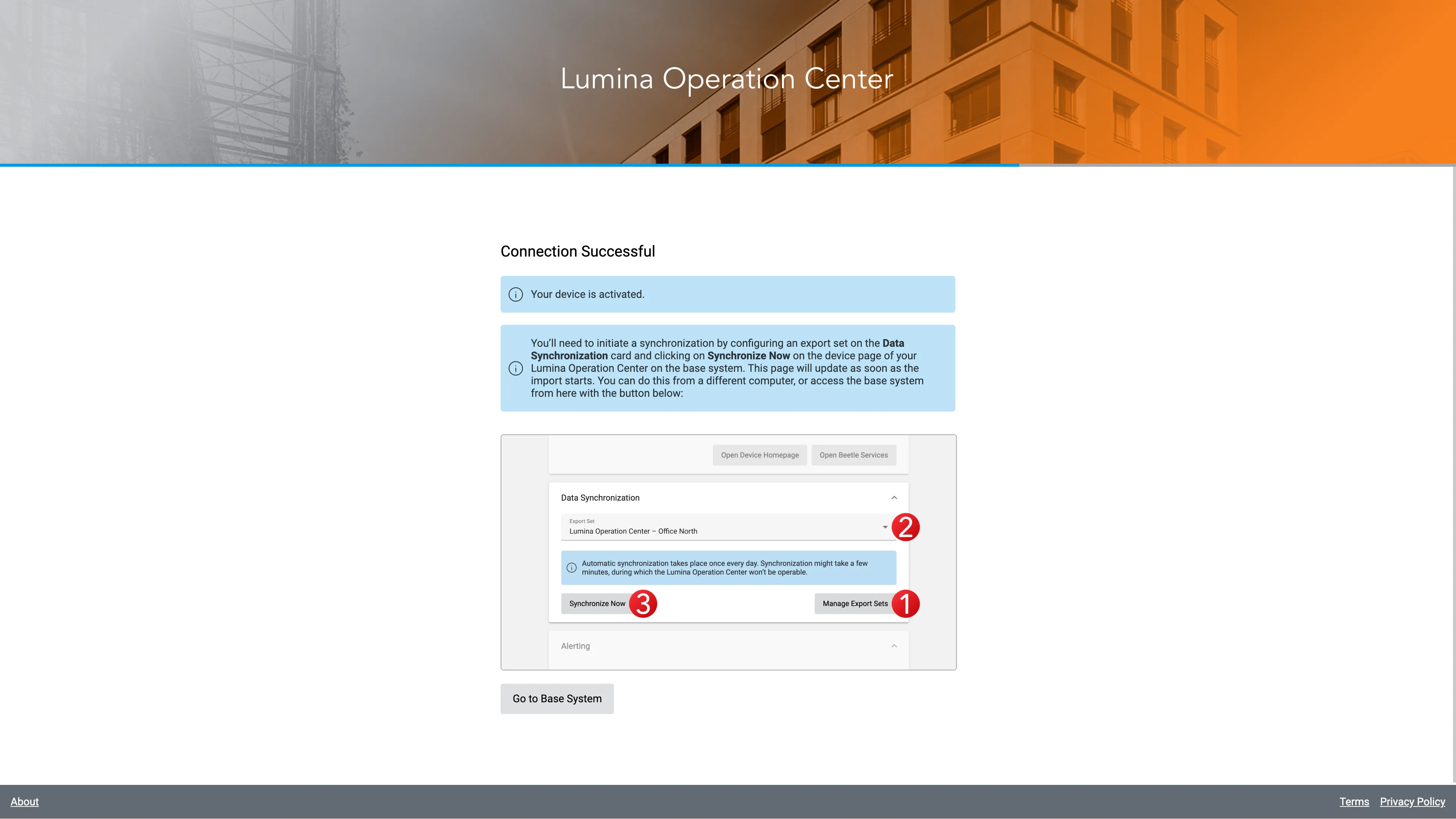
After clicking on Go to Base System, you will be redirected to the Device Configuration page of the Lumina Operation Center on the base system.
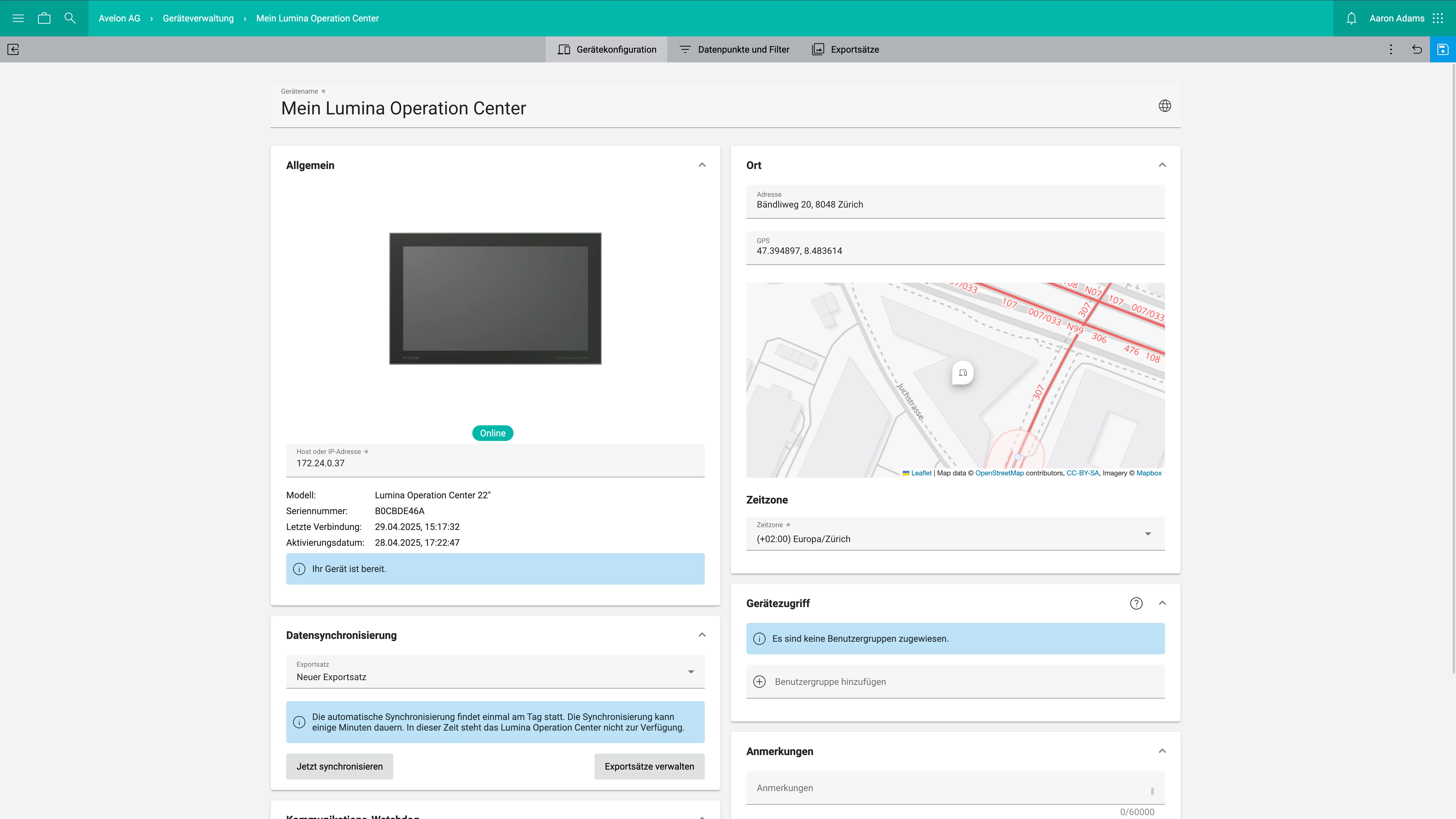
Here you can create an export set and synchronize it with the Lumina Operation Center. An export set is a collection of dashboards that you want to use on the Lumina Operation Center.
Manage export sets and synchronize with Lumina Operation Center